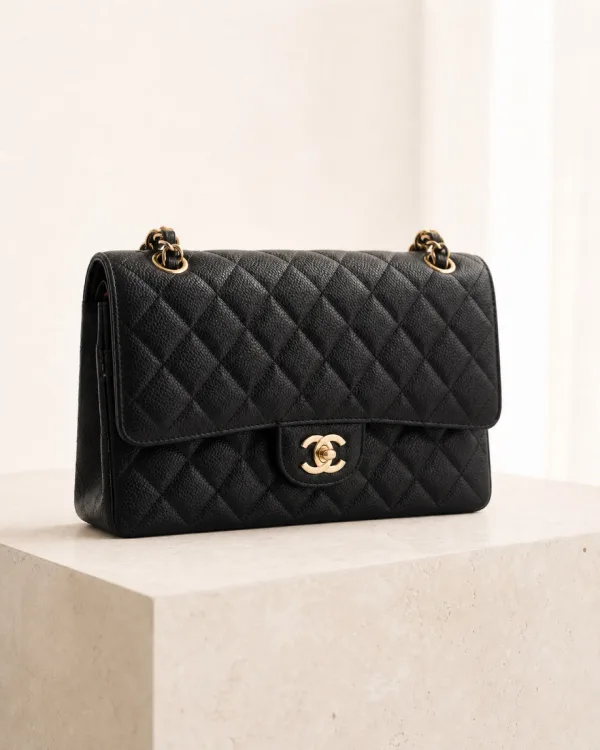
Start clean and completely dry
Empty pockets and remove loose surface debris before storage. Do not enclose an item while damp, warm from wear or carrying a strong storage odour.
Luxury Storage Guide
Learn how to store pre-owned luxury bags, watches and jewellery between wears. Thoughtful support, separation, climate control and periodic inspection can reduce avoidable distortion, scratches, colour transfer, mould risk, tarnish and damage to delicate components.
This is general preventive guidance. Follow the original maker’s instructions for the exact material, movement and construction. Seek specialist advice for fragile, vintage, repaired, exotic, gemstone-set, pearl or mould-affected pieces.
Storage Priorities
Good storage is clean, dry, supported and easy to inspect. The safest position and enclosure depend on the item rather than one rule for every luxury piece.
Empty pockets and remove loose surface debris before storage. Do not enclose an item while damp, warm from wear or carrying a strong storage odour.
Use light, even support without stretching seams, flattening padding or placing weight on handles, straps, crowns, clasps or stone settings.
Give bags, watches and jewellery individual covers or compartments so metal, hard stones and dark or unstable finishes do not rub against softer materials.
Check stored pieces periodically for moisture, mustiness, spotting, tarnish, battery issues, pressure marks, loose settings or transfer before damage progresses.
Handbags & Small Leather Goods
A structured handbag, soft clutch, wallet and embellished evening bag do not need identical storage. Choose the position, support and cover that place the least strain on the individual piece.
Store a structured bag upright only when it stands securely on a stable base without leaning or pulling at its handles. Store a soft, fragile, heavily embellished or unstable bag flat when upright storage would distort it.
Use clean, unprinted, unbuffered acid-free tissue to support the natural body. Avoid newspaper, sharp folds, bulky organisers and overfilling that stretches seams, presses the lining or forces the closure.
Use the clean original dust bag where suitable. Otherwise choose a breathable, undyed or tested-colourfast cotton cover. White fabric is not automatically safe if it sheds, transfers dye or contains printed areas.
Loosely wrap chains and metal straps in clean acid-free tissue or undyed colourfast cotton, then position them so their weight does not press into leather. Do not hang a bag long-term by its handles or strap.
Avoid prolonged direct contact between bags, especially light and dark colours and patent, coated, suede or highly pigmented finishes. Individual covers or acid-free tissue barriers can reduce rubbing, pressure and transfer.
Chain impressions are common on some designs and careful wrapping can reduce them, but prevention cannot be guaranteed. Follow material-specific care for lambskin, patent, suede, exotic, metallic, repaired and coated finishes.
Humidity, Ventilation & Mould
Warmth, sustained humidity and poor air circulation increase mould and corrosion risks. Excessive dryness and rapid climate changes can also affect leather, wood, textiles and adhesives, so aim for a stable, moderate environment.
Use a hygrometer in humid climates and respond to sustained readings approaching or exceeding 65% relative humidity with safe room ventilation or dehumidification. Keep items away from damp walls and condensation.
In a dry indoor room away from sunlight and heat, periodically remove clean, dry bags from their covers and open boxes for inspection. Let the item and its cover ventilate before returning them to storage.
Do not seal leather in ordinary plastic or place it in a damp, musty or unventilated enclosure. A presentation box is an inclusion, but it is not automatically the safest long-term enclosure for every handbag.
Avoid direct light, heaters, bathrooms, laundries, garages, attics, car interiors, floors and shelving against damp exterior walls. Leave enough space for air to move around covers and cases.
Persistent mustiness, new spotting, powdery deposits or visible growth may indicate mould. Isolate the item and seek specialist advice rather than brushing it indoors or applying perfume, household cleaner or conditioner.
Do not place loose moisture absorbers against an item or assume one sachet controls a room. Use humidity-control products only as directed and where suitable for the material, enclosure and monitored conditions.
Luxury Watch Storage
A watch needs individual support, a dry environment and model-specific handling. Movement type, complications, seals, bracelet and strap material determine the correct routine.
Place the watch in its clean original case, a soft-lined watch box or a suitable roll that supports it without forcing the bracelet. Prevent the buckle, clasp or bracelet from striking the case back.
Remove surface moisture and allow the watch and strap to dry before storage. Return the crown and pushers to their normal safe position as the model instructions require, and never operate controls under water.
Store mechanical and analogue quartz watches away from strong magnetic fields, speakers, magnetic phone or tablet covers and magnetic handbag closures. If timekeeping changes suddenly, arrange an appropriate professional assessment.
Do not force a winding crown or assume every automatic watch needs a winder. Use the instructions for the exact calibre when restarting, winding or setting it, and follow the maker’s model-specific servicing advice.
A depleted battery should not be left indefinitely inside a quartz watch because leakage or corrosion can damage the movement. Arrange professional battery replacement and appropriate seal testing promptly.
Store leather straps completely dry in a gentle curve without tight buckling or pressure. Keep spare links, straps, tools, tags and service records wrapped and labelled separately rather than loose beside the watch.
Fine Jewellery Storage
Jewellery can scratch, chip, knot, bend or tarnish while it is not being worn. Individual compartments reduce contact and make it easier to notice a loose clasp, setting or thread before the next wear.
Store each piece in its clean original case, a suitable soft pouch or a separate fabric-lined compartment. Do not heap jewellery together or place heavy pieces on delicate settings.
Fasten necklace and bracelet clasps, then lay chains flat or in a dedicated channel so they do not knot, kink or pull against pendants. Keep earrings paired without forcing posts or clips.
Diamonds and other hard gemstones can scratch softer stones, pearls, enamel and polished metal. Give stone-set pieces their own compartment and protect exposed points from impact.
Keep pearls away from perfume, cosmetics, perspiration, household chemicals, high heat and abrasive contact. Wipe them gently after wear, fasten strand clasps, lay strands flat and store them separately without creating excessively dry conditions.
Store silver and other tarnish-sensitive metals completely dry in a suitable lined case or material-specific anti-tarnish pouch. Avoid rubber, damp paper and unknown chemical storage products.
Check clasps, prongs, links, threading, backs and settings under good light. Stop wearing a piece if a stone moves or a component feels loose, and seek the appropriate repair advice.
Packaging, Papers & Components
Original packaging and records can support completeness and buyer confidence, but they should be stored in a way that does not create pressure, moisture or contact damage.
Store boxes, dust bags, watch cushions and jewellery cases away from damp, sunlight and crushing. Do not use a damaged, musty or dye-transferring enclosure simply because it is original.
Keep receipts, certificates, authenticity documents and service records flat, dry and separate from the item. Retain clear digital copies and protect personal information when sharing documents.
Wrap locks, keys, clochettes, straps, charms, spare links and tools individually and label them to the correct piece. Do not leave hard or metal components loose inside a handbag or against a watch or jewellery item.
Storage Tips FAQs
No. A structured bag may be stored upright when it stands securely on a stable base with light internal support. A soft, fragile, very heavy, embellished or unstable bag may be safer stored flat if upright storage would distort the body, base, handles or attachments.
Not always. Some boxes restrict ventilation or place pressure on the bag, and storage near heat can dry materials. Follow the maker’s instructions for the exact item. Keep the original box clean and dry as an inclusion even when the handbag is better stored in a breathable pouch on a suitable shelf.
No. White fabric can still contain prints, finishes, optical treatments or fibres that rub or shed. Use the clean original pouch where suitable, or a breathable, undyed or tested-colourfast cotton cover that is clean, dry and non-shedding.
Individual space and covers are safer. Prolonged contact can create rubbing, pressure and colour transfer, while patent, coated or unstable finishes may be more vulnerable to surface adhesion in warm or humid conditions.
Loosely wrap it in clean unbuffered acid-free tissue or clean undyed colourfast cotton and position it so the metal does not rest against the leather. This can reduce pressure marks but cannot guarantee an impression-free surface on every design.
Only use felt when it is clean, undyed, non-shedding, tested colourfast and suitable for conservation storage. Ordinary craft felt may transfer dye, shed fibres or contain unknown finishes. Clean unbuffered acid-free tissue or undyed colourfast cotton is usually a more predictable barrier.
Periodic ventilation helps you inspect a clean, dry bag and avoid leaving it undisturbed in a stale or humid enclosure. Air the item and cover in a dry indoor room away from direct sunlight and heat. Persistent mustiness or visible spotting needs specialist attention.
Not automatically. Unmonitored desiccants can create local dryness, leak or contact the item, and they do not control a whole room. Monitor the storage environment and use humidity-control products only when they are appropriate for the material and enclosure.
No. Requirements vary by movement, complication and maker guidance. A suitable winder may be useful for selected watches, but it is not a universal preservation requirement. Follow the exact model instructions and do not force the crown when winding or setting.
Arrange professional battery assessment and replacement promptly. A depleted battery left inside a watch can leak or corrode and damage the movement. Battery service should also consider the case seals and water-resistance requirements of the model.
It is safer to separate them. Watch cases, bracelets, buckles, diamonds and metal jewellery can scratch softer surfaces, while chains can catch around crowns, pushers, clasps or settings.
Keep them individually in a clean, soft, suitable pouch or lined compartment, away from hard gemstones, perfume, cosmetics, household chemicals, high heat and abrasive surfaces. Fasten pearl strand clasps, lay strands flat, avoid extreme dryness and have frequently worn stringing checked periodically. Follow material-specific maker guidance for opals, emeralds, enamel and other delicate elements.
New requires original, unopened packaging. An item that has never been used is graded Unused if its packaging has been opened or is missing. For the other grades, inclusions are recorded separately from physical condition. Missing or damaged inclusions may affect completeness, buyer confidence, marketability and value, and material damage is disclosed.
Long-Term Care
Preventive storage cannot stop natural ageing, but it can reduce avoidable damage and preserve clearer condition, inclusion and service history when the piece is later worn, assessed or sold.
Email us about this piece.